Pages

.


What do you think of these solution?

.


The Hues and History of the Peridot Gem


Varying in coloration from a yellow-green color mix to a green with a brown tint, the standard clarity of the peridot is eye-clean. This gem is one of the few that only comes in one basic color. A magnesium iron silicate, the gemstone’s final coloration is frequently decided by the quantity of iron in its crystalline structure. The more iron the stone contains, the more golden the green tint’s appearance will become.

It is interesting to note that this gemstone has even been found in meteorites. Since the quantities of these stones are far too minimal to make them suitable for the jewelry trade, it is virtually impossible to purchase celestial gems. Terrestrial mining sources for peridot gems include Arizona’s San Carlos Apache Reservation, China, Myanmar and Tanzania. Some of the rarest stones, and therefore the most valuable, come from St. John’s Island.

Ancient Egyptians associated the peridot with the sun god. This association may have been due to the stone’s qualities of maintaining the same color hues under all types of light sources. When this gemstone was set in gold, ancient folklore suggested that it would protect the wearer at night. Tying the gems to a left arm was a practice associated with protection against evil spirits. Those worried about otherworldly influences would frequently request priestly blessings on their amulets.

Due to the stone’s appearance, there has been some confusion between this gem and the emerald or topaz. Because of this misunderstanding, it is likely that some of the stones that were historically deemed to be unusually yellow-green representations of the latter two gems might actually have been examples of the peridot. Case in point is Pharaoh Cleopatra VII, who famously collected emeralds. There is now a belief that these stones were in fact peridots.

Unlike other stones that have enjoyed a somewhat steady admiration by collectors and jewelry aficionados, the peridot is more of a faddish gem. Ancient Egyptians routinely included it in their amulets and other wearable art in the second millennium BCE. Ancient Romans appreciated the color qualities that would remain the same in natural and candle light.

Its availability made it a favorite of church builders in the Middle Ages. One example is the Cathedral of Cologne, where the stone served as ornamentation for many of the shrines, chattel and artful displays of worship. In the Baroque, the stone once again developed a loyal following. Surprisingly, it was not a big hit with the crowned heads of Europe, which may account for the lack of mentions in the important jewelry collections of nobles.

The last notable rediscovery of the peridot took place in the 1990s. This latest fad coincides with the discovery of a gem-rich mine in Pakistan, which offers quality gems as well as a large quantity of the stones. Clever marketers were quick to name them Kashmir peridots, which is a play on the Kashmir sapphires.

Peter Suchy Jewelers is located at 1137 High Ridge Road in Stamford Connecticut and we invite you to stop by our showroom to see some of our stunning vintage and estate pieces.

If you enjoy buying estate and vintage jewelry online, please do so by visiting our eBay store where you can purchase with confidence.

We also invite you to like us on Facebook and follow our Pinterest Boards to see what’s exciting in vintage, antique and estate jewelry!
reade more... Résuméabuiyad

The History of Charms Dates Back to Prehistoric Times!


The charm and its related charm bracelet have a long history that dates back to prehistoric times. Whereas today’s charms may be mementos from travel outings or times spent with friends, old charms fashioned from bones and shells were a necessity for survival. In a time when natural processes were not well understood, these charms bridged the gap between nature’s wrath and man’s survival.

Inexorably linked to spirits and spiritualism, early charms were bits and pieces of larger amulets that served to ward off evil, protect against death by natural disasters and attract good fortune and luck. There is evidence that charms worn by Babylonians and Persians - between 500 BCE and 400 BCE - were made of rock crystal and featured the likenesses of gods and animals. Some charms were fashioned to look like beasts or enemies, which wearers hoped would give them power over these dangers.

Other bygone eras that favored charms included the times of the Egyptian pharaohs and the queens of the Renaissance. European aristocrats alternatively believed in the curative powers of certain charms and in their protection against evil. Ascribing supernatural powers to certain charms, members of the Medici household as well as Queen Elizabeth I would consistently wear charms on their persons.

The Victorian age also favored charms. Queen Victoria herself was said to be a big fan of these jewelry pieces. While in the beginning she may have merely loved the whimsical nature of some charm designs, she later combined charms with mourning jewelry, which had its heyday during her reign.

The subsequent great wars saw soldiers traveling the world. Bringing back little mementos was a popular practice, and charms were easy to collect and convenient to carry. Some were mailed back to sweethearts. On American shores, this is how charms became so popular among young women. In fact, this popularity became so widespread that soon small charms were sold via ubiquitous gumball vending machines. Mothers would start their daughters’ charm bracelets at birth, adding symbolic charms throughout the years as different milestone were reached.

Jewelry aficionados’ love affair with charms never really waned. Nowadays, eBay and other auction sites fulfill the desires for vintage charms and fully completed bracelets. Although these charms do not hold the same appeal for buyers as they did for the original owners of the pieces, it is clear that the practice of collecting self-contained jewelry mementos is a popular one.

Whether the wearer owns them for sentimental reasons or because of the rich history that they represent, charms continue to be so popular that even famous jewelry makers cater to consumers with their own versions of well-liked charms. Case in point is Tiffany & Co., which has created a 34-page online catalog of charms.

Located at 1137 High Ridge Road in Stamford Connecticut sits Peter Suchy Jewelers—trusted sellers of vintage and estate jewelry. If you’re looking for that perfect charm, we invite you to visit our showroom.

We also hope you’ll like us on Facebook, check us out on Google+ and be sure to visit our Top-Seller eBay Store to browse and purchase the most amazing estate and vintage jewelry out there today—yes we search and only list the best of the best!
reade more... Résuméabuiyad

When Were Cuff Links First Used?


Unlike other pieces of decorative jewelry, the cuff link does not have a long history. You might actually say that it is a relative newcomer to the world of men’s fashion accessories. Today’s modern cuff link owes it appearance to men’s fashions of the 16th century. Shirts were ruffled, wristbands also featured ruffles and tailors left small holes in the cuffs of the shirts to help wearers bring them together and create the look of an undisturbed continuation of this style element. Men would direct their valets to tie the cuffs together with silk strings. The resulting look created a neat all-around wrist ruffle with no visible gap. These cuff strings remained in use until the 19th century.

France’s Louis the Great, one of whose mistresses has been credited with increasing the popularity of the locket, is also at the heart of the actual cuff link creation. He preferred the use of buttons to strings. Artisans of the time would make ornamental pairs of jeweled studs or gold links. Great Britain’s King Charles II also favored cuff links. Since his wife was said to have supported the new sport of women wearing men’s clothes behind closed doors, she is indirectly credited with advancing the status of the cuff link as well.

There are various known styles of cuff links. The barrel link features an overlapping end. The French link is a double-length cuff. Modern links favor the shank style, which has two large pieces that are connected and secured with a tight-fitting stud. Materials used ran the gamut from gem stores to pearls and gold. Some would feature heavy materials and sizable engravings. Others served as settings for diamonds and pearls. Although modern examples show cuff links to generally have flat and quadrilateral fronts, historic pieces are known to actually show off coats of arms or the faces of lions, bears and birds.

Since cuff links have been an almost exclusively male fashion accessory, they came into use as signs of belonging to social clubs and fraternities. It is not unusual to find enameled cuff links that highlights emblems of student societies. Some religious organizations, too, have used these accessories to identify the wearer as a member. Today, these types of jewelry pieces are sold at auctions or as curiosities online. Some collectors appreciate cuff links of a certain club while others seek after those made of gold or featuring gemstones.

Modern wear of cuff links calls for careful accessorizing with other pieces of jewelry. It is considered gauche to wear gold cuff links with a silver watch and vice versa. Fashion-conscious men therefore own watches with gold and silver bands. An alternative is the selection of a leather wristband, which will match cuff links made of either metal. Moreover, the modern man knows to match a set of colored cuff links to the hue of the shirt. He further matches the color with a suitable tie.

At Peter Suchy Jewelers in Stamford CT, we have a wide variety of vintage and estate cuff links so we invite you to visit our showroom.

Want to browse and purchase cuff links online? If so head on over to our eBay store. We hope you’ll like us on Facebook and add us to your circles on Google+!
reade more... Résuméabuiyad

Everything You Ever Wanted to Know About the Cameo


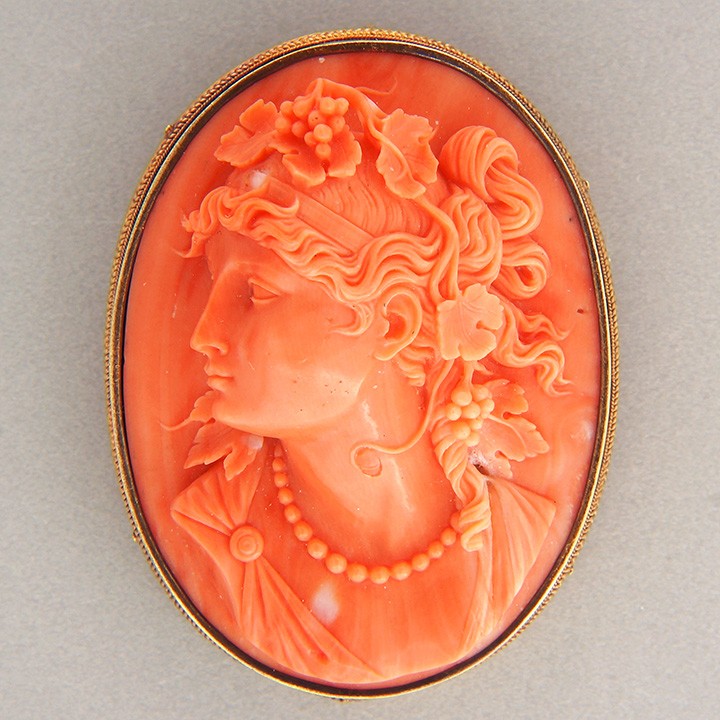
Most anyone associates a cameo with the brooch worn at a high lace collar during the Edwardian period. In fact, the term cameo actually refers to a gem carving or engraving method that creates a piece of wearable jewelry through the formation of a raised relief image.

Roman cameos.Made of agate or onyx, these cameos were popular between 25 BCE and 60 CE. These are frequently also known as glass cameos. A famous example of this period is the Gem of Augustus. It is a half-inch thick and features Augustus Caesar ruling over the allegorical representation of the pantheon and the known world in submission to Rome.

Religious cameos of the Middle Ages. In the period spanning from the 5th to the 15th century, cameo carving was a favorite art form among the creators of holy votive crowns and chattel that would be used during high mass. A famous example is the Lothair Cross, which was manufactured around the year 1000. It features an Augustus cameo at its center. Made of onyx, the cameo displays Roman Emperor Augustus.

Shell cameos. The heydays for the shell cameo were the 15th and 16th centuries. Artisans would carve shells of mussels or mollusks. Popularity for these pieces of art remained strong even into the 19th century.

Hellenistic cameos of the Renaissance. Usually dated sometime between the late Middle Ages and the 17th century, the Renaissance saw the likes of Michelangelo and Leonardo daVinci. It also saw an uptick in the creation of cameo carvings. The favored motif bar none was anything having to do with Hellenistic themes. Ancient Greek mythology, the explorations of Alexander the Great and famous characters from literature and theatre set the backdrops for these works of art.

Royal patrons of the arts. In the 18th and 19th centuries, the tastes of monarchs and nobles dictated the design, material use and motif choice of the cameo.
In an interesting twist, most patrons of the arts requested artisans to manufacture cameos in the old Roman style and design. In an effort to portray themselves as collectors rather than contemporary art buyers, they would even artificially age their cameos. Polish noble Stanislaw Poniatowski is said to have ordered some 2,500 cut gems. He put out rumors that these gems were actually antiques.

Modern cameos no longer require the painstaking attention to detail that marked the artisanship of the old masters. The use of the ultrasonic mill has now largely automated the process of cameo carving. In some modern portraits, the use of this machine has sadly contributed to the creation of somewhat bland features that lack the detailed depiction of hair and facial features so prominently displayed on hand-carved pieces. Due to the time investment in the process and the availability of machines, the number of artisans who preserve the artistry involved in hand carving has gone down in number quite considerably.

Peter Suchy Jewelers located at 1137 High Ridge Road in Stamford Connecticut invites you to visit our showroom and check out our inventory of vintage and estate cameo pieces.

We also hope you’ll like us on Facebook and add us to your circles on Google+. Looking to browse cameo jewelry online—visit our eBay store!
reade more... Résuméabuiyad

How Did the Locket Come to Be?


Lockets rank among the oldest known pieces of jewelry. Researchers usually mention them in the same breath as amulets and pendants. In earliest times, the locket would open up to contain sacred engravings and substances. Some lockets were actually small vessels that could hold anything from salt to blood or holy water.

In the 15th century, lockets frequently contained a painting of the reigning monarch as well as a symbol taken from his or her coat of arms. Historians know that Queen Elizabeth I had a fondness for giving locketscontaining a painted image of herself to people she sought to reward. Sir Francis Drake was a recipient of this type of prize. His locket featured her painting as well as the symbol of the phoenix.

The initial heyday for the locket was in the 17th century. Called a lavaliere after the Duchesse de La Vallière, her status at the court of Louis le Grand turned her affinity for wearing heavy opening pendants into a craze that soon spread this fashion statement among royals, nobles and anyone else at court. It did not take long for the lavaliere to cross the borders into Spain, Russia, Denmark and England. Eventually, lockets also made their way to America.

It was in 18th and 19th century Britain that lockets became one of the most popular items of wearable art. Frequently associated with mourning jewelry, these lockets were in memory of a decedent. It is said that Queen Victoria helped fuel the creation and prolific use of mourning jewelry. Mourning lockets might contain an image or daguerreotype of the departed friend or family member as well as a lock of hair. The exterior of the lockets would feature ornamentation in the form of flowers. Common themes were lily-of-the-valley or forget-me-not plants.

At that time, some of the most intricate artwork with human hair as the medium would be created. For example, artists might make backdrops of weeping willows out of human hairs. Placed behind a thin sheet of glass, these pieces of art would be worn by women during the mourning period prescribed by British custom. Favorite material choices included onyx, enamel, diamonds and human hair. Later on, gutta-percha would also become a sought after material. Plenty of these pieces are still in circulation and are now sold at auction or as curiosities on the Internet.

What sets apart the modern American locket from other pieces of body ornamentation is the functionality of the device. Generally speaking, lockets open up to display two slightly hollowed out halves. These pieces form a whole that usually offers just enough space to display a small photograph and perhaps a lock of hair. Wearers usually attach lockets to a chain that is then to be placed around the neck although in the 19th century, it was a common practice for women to wear lockets pinned on their belts.

Peter Suchy Jewelers invites you to visit our showroom at 1137 High Ridge Road in Stamford Connecticut—we offer a wide variety of estate and vintage lockets, pendants and amulets.

We hope you’ll like us on Facebook and Google+ and if you like browsing for estate and vintage jewelry, check out our eBay store—there’s sure to be a piece that entices you!
reade more... Résuméabuiyad